
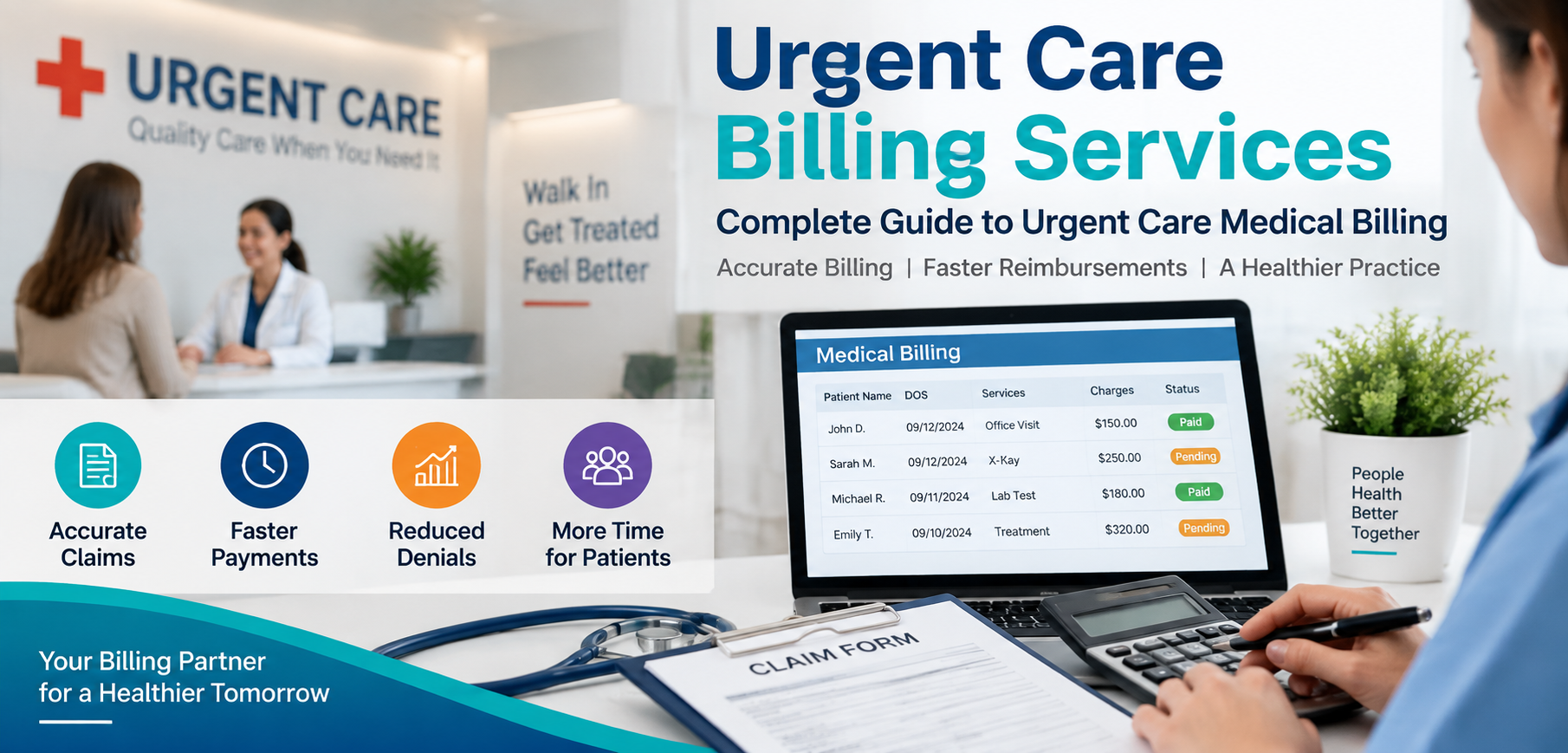
Urgent care facilities give patients the opportunity to receive medical care quickly and avoid long wait times at the emergency room. Like other medical facilities, urgent care facilities have to code, verify insurance, file claims, and collect payment. Often this is done with limited staff and resources.
The right medical billing service can help a facility better manage its cash flow. Additionally, the service may assist in reducing the number of claim denials and billing errors.
With the constantly increasing number of patients using medical facilities, it is imperative that urgent care facilities employ effective and efficient billing services.
What Is Urgent Care Billing?
Urgent care billing is the process of transforming medical services provided through an urgent care facility into medical claims.
Urgent care billing and handling processes overlap at a number of points. For example, the billing process begins with patient registration, which is similar to the intake process. The billing process ends with the collection of payment.
There are many reasons to ensure medical billing processes are effective and efficient. For example, delays in billing may cause unnecessary hardships on patients.
Urgent care facilities may partner with professional medical billing companies to assist them with medical billing processes.
Understanding Billing for Urgent Care Services
Billing for urgent care services contains several steps, and an error in any of these steps can cause problems in the overall process and affect payment.
Upon arrival at an urgent care facility, the patient is required to provide insurance and personal information. Staff members verify insurance details to determine coverage and patient responsibility.
After treatment is completed, the healthcare provider’s documentation is reviewed, and appropriate diagnosis and procedure codes are assigned. Charges are entered, claims are checked for errors, and they are submitted to insurance payers.
The billing team must then monitor claim status, collect payments, and investigate denied claims.
Urgent care billing services may include:
- Patient registration
- Insurance verification
- Medical coding
- Claim submission
- Payment posting
- Denial management
- Accounts receivable follow-up
Urgent care facilities experiencing high patient volumes may benefit from outsourcing these services.
Understanding Urgent Care Medical Billing
Urgent care centers see a broad range of medical conditions and provide many different types of healthcare services.
Because of this service variation, urgent care centers require accurate documentation and coding processes. Different treatments may require different medical codes, documentation standards, and payer requirements.
This makes urgent care medical billing complex.
Insurance companies may also have different requirements regarding documentation, coding accuracy, medical necessity, and claim processing.
A structured billing workflow helps identify errors before claims are submitted and improves the overall revenue cycle management process.
Urgent Care Center Billing Process
The urgent care center billing process begins as soon as a patient arrives and registers for medical services.
Registration staff must collect accurate patient information, including:
- Full name
- Date of birth
- Insurance details
- Demographic information
The healthcare provider documents the patient’s condition and services provided. The billing team then converts this information into a claim format that insurance companies can process.
After submission, claims must continue to be monitored. Billing staff need to identify unpaid claims, review denials, and take appropriate action.
Because of these requirements, medical billing for urgent care centers is an ongoing process.
Understanding an Urgent Care Receipt
An urgent care receipt is a document provided to patients showing payment information related to their healthcare visit.
A receipt may include:
- Patient name
- Date of service
- Payment method
- Amount paid
- Healthcare facility details
Patients may request an urgent care receipt for reimbursement purposes, health savings accounts, flexible spending accounts, or personal records.
A receipt is different from other healthcare financial documents. For example, an explanation of benefits (EOB) or itemized statement may include additional details about charges and insurance payments.
Clear financial documentation helps patients better understand their healthcare responsibilities.
Common Urgent Care Billing Problems
Although there are many billing challenges, the most common issues are related to:
Patient Information Errors
Incorrect patient information can result in rejected or delayed claims.
Coding and Documentation Problems
Medical codes must accurately represent the services provided. Incorrect or incomplete documentation can affect reimbursement.
Insurance Eligibility Issues
Insurance coverage can change, causing unexpected payment problems after healthcare services have already been provided.
Claim Denials
Denied claims should not simply be resubmitted without reviewing the reason for denial. A proper denial management process helps identify and correct underlying issues.
Professional medical billing services can help healthcare organizations improve billing accuracy and reduce claim-related problems.
Acute Care Billing and Urgent Care Billing
While similar in some ways, acute care billing and urgent care billing have important differences.
Urgent care centers typically treat non-life-threatening conditions that require prompt medical attention, such as infections, minor injuries, sprains, and lacerations.
Acute care covers a broader range of short-term medical services and is commonly provided in hospitals and emergency medical settings.
Because billing depends on factors such as healthcare setting, services provided, documentation, payer requirements, and coding rules, each case must be reviewed individually.
Searching for Specific Urgent Care Billing Information
Patients often search phrases such as:
- Nightwatch urgent care billing
- Velocity urgent care billing
- Baptist urgent care billing
- Crimson urgent care billing
- Express Care billing
- Immediate Care billing
- Instacare billing
- Jefferson urgent care billing
- Premier urgent care billing
These searches usually happen when patients need help understanding a bill, making payments, or contacting a billing department.
Doctor’s Office Solutions, LLC is not the billing department for these organizations. Patients should contact their urgent care provider directly for questions about specific bills.
Benefits of Using Urgent Care Billing Companies
Urgent care staff often manage heavy workloads and may not have enough time to handle every billing responsibility internally.
Professional urgent care billing companies can help create standardized processes for:
- Claim submission
- Payment tracking
- Denial management
- Accounts receivable
- Revenue cycle activities
Outsourcing billing allows healthcare providers to focus more on patient care while experienced billing professionals manage financial processes.
A reliable billing partner should maintain communication, provide transparent reporting, and help resolve issues related to claims and collections.
Importance of Billing in an Urgent Care Center
Billing plays an important role in the financial health of an urgent care organization.
Prompt claim submission and proper follow-up help maintain consistent cash flow. Accurate accounts receivable management also helps patients understand their financial responsibility.
Healthcare organizations should work with billing partners that focus on creating efficient processes from patient registration through final payment collection.
Urgent Care Medical Billing Services From Doctor’s Office Solutions
Doctor’s Office Solutions provides professional medical billing services designed to help healthcare organizations improve billing and collection processes.
Outsourcing urgent care billing can help optimize:
- Claims processing
- Payment collection
- Revenue cycle activities
- Billing workflow management
Whether you operate an independent urgent care center or manage multiple locations, a structured billing system can help improve efficiency and financial visibility.
Frequently Asked Questions About Urgent Care Billing
What is urgent care billing?
Urgent care billing involves capturing, coding, submitting, and collecting payments for healthcare services provided by urgent care facilities.
What are urgent care billing services?
Urgent care billing services include insurance verification, coding, claim submission, payment posting, denial management, and patient billing.
Why are urgent care claims denied?
Claims may be denied because of incorrect patient information, incomplete documentation, coding errors, insurance issues, or payer requirements.
What information is included on an urgent care receipt?
An urgent care receipt may include patient information, healthcare service details, payment amount, payment method, and date of service.
Can urgent care centers outsource medical billing?
Yes. Many urgent care centers outsource billing activities to professional medical billing companies.
What should urgent care centers look for in a billing company?
Healthcare organizations should evaluate compliance, communication, reporting, workflow management, denial handling, and revenue cycle expertise.
How does urgent care billing affect cash flow?
Accurate and timely billing helps improve collections, reduce delays, and maintain a healthier revenue cycle.
Is urgent care billing the same as emergency department billing?
No. Urgent care and emergency departments have different services, coding requirements, and billing processes.
Conclusion
Effective urgent care billing requires coordination between healthcare providers, administrative staff, and billing professionals.
Accurate patient information, complete documentation, correct coding, timely claim submission, payment posting, and denial follow-up are all essential parts of the billing process.
As patient volume increases, managing these responsibilities internally can become challenging. Outsourcing urgent care billing services can help healthcare organizations improve efficiency and focus more on delivering quality medical care.
Doctor’s Office Solutions offers professional medical billing services to help healthcare organizations improve billing operations and manage revenue cycle activities effectively.