
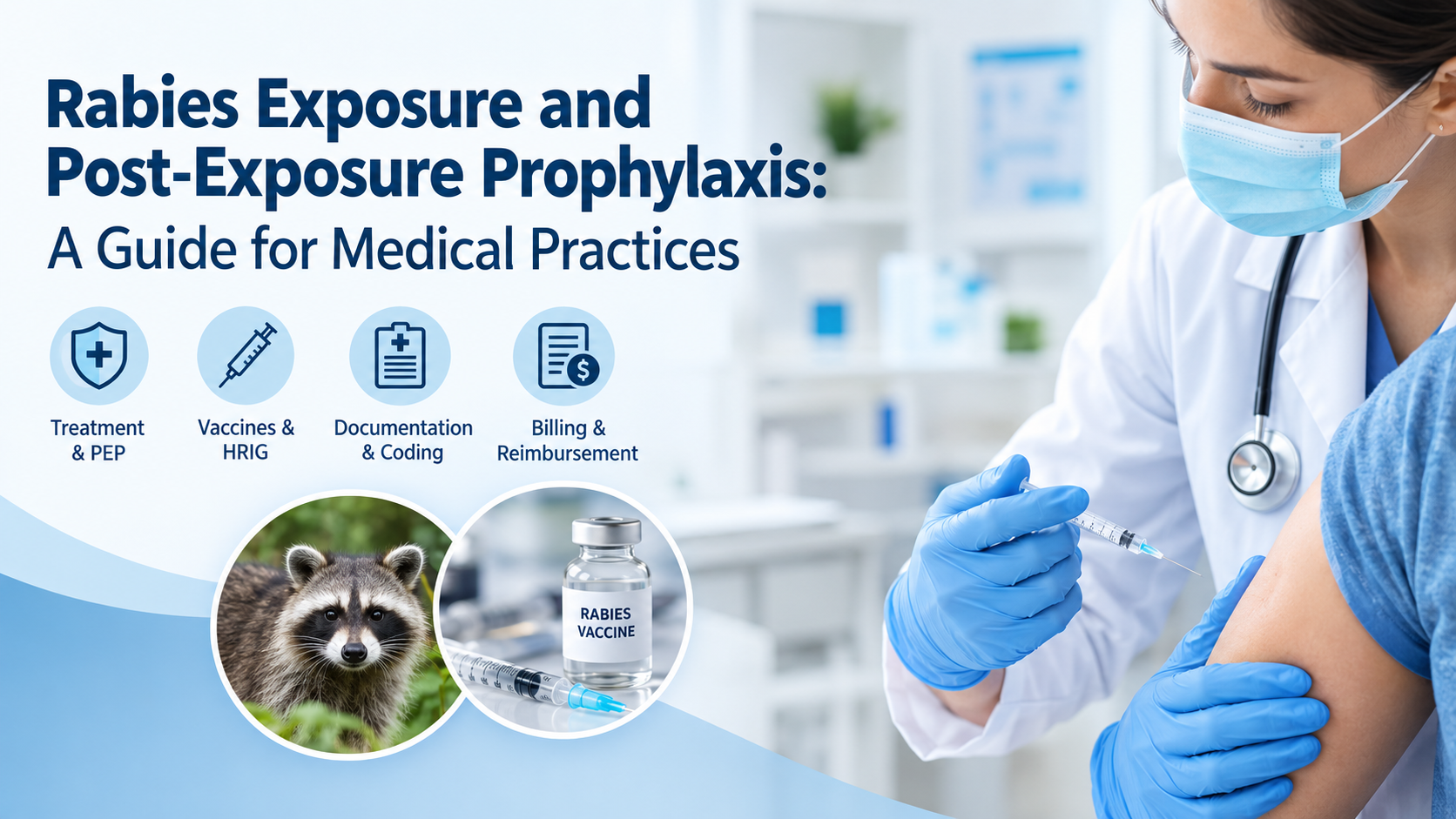
Rabies exposure presents a major medical concern and requires an initial rapid evaluation. Despite the low incidence of human rabies cases in the United States, thousands of cases of potential exposures are seen annually and assessed by clinicians. Each year, the CDC estimates that approximately 100,000 Americans receive rabies post-exposure prophylaxis (PEP).
Exposures present increased case complexity for clinics beyond the clinical care and require clinicians to also document the exposure, work with public health, and dose administer, vaccinations and human rabies immune globulin (HRIG), and schedule and document follow-up.
Rabies is a viral disease of the central nervous system that is nearly always fatal once symptoms present. In the absence of clinical signs, infection can be prevented by the administration of post-exposure preventative therapy.
What Is Rabies Exposure?
Exposures may result from animal bites or scratches, though infection can occur from other animal tissue contacts resulting in exposure through breaks in the skin or mucous membranes.
In the U.S., domestic animals may acquire rabies, and though bats, raccoons, skunks, and foxes are typically associated with rabies, wildlife, fur-bearing animals may carry rabies as well.
Public health authorities should be consulted to determine the need for PEP, as the risk of exposure is related to the type of animal, the nature of the contact, and exposure circumstances.
What Is Rabies Post-Exposure Prophylaxis (PEP)?
Post-exposure prophylaxis (PEP) is the treatment applied after an exposure to protect against infection.
Rabies PEP is recommended by the CDC for individuals previously unvaccinated against rabies and includes the following:
- Immediate and thorough wash of the exposure site
- Human rabies immune globulin (HRIG)
- Administration of rabies vaccine at days 0, 3, 7, 14 and 14
It is important for individuals with certain immune disorders to take an additional vaccine dose and receive an assessment for rabies antibody. PEP for previously vaccinated individuals is less complex and does not involve HRIG.
The specifics of the case should always be considered and the recommendation for treatment should be based on the most current clinical recommendations.
Why Quick assessment is important
A threat of exposure to rabies requires serious attention. The cleaning of a potentially exposed site should be initiated immediately and the patient should receive an assessment from both the medical and public health avenues without delay.
PEP is indicated more often with a threat of exposure to saliva. The CDC advises cleaning of potential exposure sites with soap and water. Healthcare professionals should ask the patient or observer many questions regarding the exposure to determine if PEP is indicated. These questions are as follows:
- Description of the animal involved in the exposure
- If the animal involved was a wild animal
- If the animal is observed or can be tested
- The site of the scratch or bite
- If the animal exposed the patient to saliva, if liquid or other materials became exposed to the patient’s broken skin or mucous membranes
- History of rabies vaccination of patient
- The time the exposure occurred
Healthcare professionals and those who work in public health use the information to make a proper recommendation for PEP.
The Importance Of Thorough Documentation In Rabies Exposure Cases
Thorough documentation is essential for rabies PEP, which requires several visits, numerous vaccinations and biologics, wound care, and follow-up care.
The entirety of the exposure and clinical assessment, along with detailed notes explaining treatment and medications and biologics administered and subsequent dates vaccines were administered and follow-up instructions, should all be thoroughly documented.
The initial and each subsequent visit should clearly note the services provided.
Documentation aides the clinician in the provision of care and the billing team in the reporting of the services.
Considerations For Rabies Vaccine And HRIG Billing
High-cost biological products and associated professional services create additional complications to medical billing.
Based on circumstances and payer requirements, practice may need to consider:
- Vaccine administration
- Rabies vaccine products
- Wound treatment
- Evaluation and management services
- Subsequent vaccine visits
- Required diagnosis and procedure codes
- Payer specific documentation requirements
Practices need to review current coding and payer policies and reimbursement guidelines rather than take a blanket billing approach.
A well documented claim demonstrates medical necessity for services and products rendered.
Administrative Challenges To Billing
There are many administrative concerns for practices when encountering rabies exposure cases.
One of the biggest issues remains incomplete documentation. If a record does not clearly document exposure, treatment, vaccinations, or the required follow-up, then the billing process becomes unnecessarily complex.
Another challenge is properly separating the sale of the vaccine from the administration of the vaccine and other services. High cost biologics add to the importance of correctly identifying the claims.
Different insurance companies have different requirements, and practices experience case-related issues including authorization, eligibility, coding, documentation, and reimbursement.
These issues often result in either no payment at all, or delayed payments.
How Medical Billing Support Can Help
Healthcare professionals should not have to spend valuable time dealing with an overly complicated billing system.
A professional medical billing company is able to address the needs of a medical practice by helping with the documentation, claim review for accuracy, meeting payer requirements for claim submission, following up on accounts that have not been paid, and addressing claim denials.
Specialists who regularly vaccinate and perform other services such as urgent care and occupational exposures would also benefit from a billing team that focuses on identifying the cause of persistent administrative issues that relate to reimbursement.
If you are in need of assistance with claims management and revenue cycle services, you can find out more about our medical billing services.
Preparing Your Practice for Rabies Exposure Cases
There are several steps a medical practice can take to make these cases easier to manage.
First, establish uniformity in the registration and clinical documentation process for potential rabies exposures. Staff should be informed on what information to collect and how to determine potential exposures.
Second, maintain accurate records of vaccines administered and HRIGs. This includes the date and pertinent details of the administration.
Third, ensure that patients are able to complete the vaccination series by documenting follow up.
Make sure the billing team has access to the clinical documentation needed to accurately report the rendered services and products.
Streamlined workflows between clinicians, administrative personnel, and billing staff help mitigate costly errors and enhance revenue cycle efficiency.
Commonly Asked Questions About Rabies Exposure
How much time do we have to initiate rabies PEP?
Exposures to rabies require prompt assessment by both clinical and public health services. PEP must be initiated and administered before the onset of symptoms of rabies.
Do all bites require rabies PEP?
No. It depends on the animal, circumstances of the exposure, whether the animal can be observed and whether the animal can be tested, and local public health guidelines.
Is everyone who receives rabies PEP given HRIG?
No. HRIG is generally used for patients who have not received vaccination against rabies or pre-exposure prophylaxis (PrEP).
What is the purpose of documentation?
Records facilitate patient care, follow-up, encoding, claim defense, and reimbursement. They may assist in justifying the rendered services.
Summary
Management of rabies exposure includes prompt clinical assessment, optimal prophylaxis, and attentive follow-up. An orderly billing process andmethodical documentation are essential.
Managing the documentation of the clinical evaluation, administration of vaccines, and claims requires a large amount of method and organization. By establishing billing processes and working with billing companies, practices may seamlessly manage the services they provide to patients.
Important: The information provided in this article should not be used to make medical recommendations or to replace public health recommendations made my CDC, ACIP, state, or local departments and agencies. Health Care Professionals should be aware of the state of the art clinical recommendations when making decisions related to the evaluation and management of possible rabies exposure case.